Monday, May 23, 2016
End of Year Reflections
This year has helped be better appreciate the study of history than any previous year. From day one the focus of this class has been abut developing empathy and using it to better understand history. our use of movies to learn history this year has been really useful and fun. on top of being entertaining they are able to provide unique perspective on history and offer unique opportunities to analyse history. Glory, 12 Years a Slave, Smoke Signals, and Thirteen Days, all were great movies that broadened our understanding of the part of history we were studying at the time. the use of newspaper article databases was also very interesting, as it gave a good way to easily access primary sources. These three things have made this year one of the best years of history I've ever had.

Friday, May 6, 2016
Draft
Dear Future,
As of now, May
6, 2016, Antarctica is a very bizarre and unique place in the world. The
treaties that govern it are some of the most complicated, its usage is widely
debated, the resources found there are numerous yet inaccessible, and its
climate is one of the most rapidly changing in the world. While it is
impossible to say what the situation in Antarctica will be when you read this, I
would like to share a bit about what we know now.
Firstly,
Antarctica is cold. Average temperatures around the continent are approximately
-37 degrees C. Antarctica is one of the coldest and driest
places on earth, almost the entire place is considered a dessert. While the
continent itself is an archipelago, it is so densely covered by ice sheets and
glaciers that it appears to be one land mass. The ice sheets on the continent
are very large, often around 2 kilometers deep and hundreds wide. These ice
sheets and glaciers account for 70% of all fresh water on the planet. However, water
is not the only abundant resource on the the continent. The estimations of the
quantity of oil and natural gas vary from 30 to 200 billion barrels of oil
equivalent. Despite this abundance, not a single drop of Antarctic oil has been
sold commercially.
Oil in Antarctica
is extremely challenging to get. While experts say there is plenty of oil
there, the actual act of acquiring it is almost impossible. Firstly there is
the cold. The harsh conditions of the climate, as well as the remoteness
intrinsic to the continent, would make working conditions unbearable. Secondly
there is the ice. Most of the oil is expected to be below the vast and numerous
ice sheets that cover the continent. As stated previously, these come in at
around 2 kilometers thick. This makes getting a drill down to the oil a huge challenge
in and of itself. Also related to the ice, is the fact that the ice would make
for poor foundations for rigs, as they tend to slide and move frequently enough
to make them unsuitable for building large structures. Thirdly is the cost.
Even if these previous challenges could be overcome, it would not be
economically feasible, due to the cost of the extracting and transporting the
oil. Experts estimate that the cost of getting a barrel of oil from Antarctica
to America would be around $100. Currently, oil in America sells for $58 per
barrel. This financial gap makes people unwilling to find ways to overcome the
other logistical challenges of oil extraction in Antarctica. “Antarctic oil is extremely
difficult and, at the moment, prohibitively expensive to extract – but it’s
impossible to predict what the global economy will look like in 2048 when the
protocol banning Antarctic prospecting comes up for renewal. By that stage an
energy hungry world could be desperate (Mathew Teller).”
As mentioned
above, the continent of Antarctica is governed and regulated by a series of treaties,
collectively known as the “Antarctic Treaty System.” The first of these treaties
was written in 1959, and it established Antarctica as a reserve for science and
nature, with indefinite bans on military or nuclear action on the continent
(this was even more remarkable when considering the fact that this was the
first demilitarization treaty of the Cold War). This treaty, along with all the
others that govern it, must be ratified by numerous nations around the globe, because
the place in considered part of the “Common Heritage of Man,” which includes
Antarctica, as well as the oceans, the moon, and all of outer space. The treaty
discussed in the quote in the previous paragraph is the Protocol on Environmental
Protection to the Antarctic Treaty System, passed in 1998. It bans all commercial
mining of any kind in order to protect the environment. However, the mining ban
comes up for review in 2048. This is especially interesting when considering
the fact that most leaders in the oil industry say there are approximately 30
years of oil reserves left in the world, conveniently ending just before the
ban comes up for review. While many experts doubt the accuracy of this claim,
it likely means that leaders in the industry will push very hard to lift the
ban so they can have access to the continent. This claim is supported by China,
one of the world leading producers and consumers of oil, recently making rapid expansion
in Antarctica, rapidly planning and building new bases all across the
continent. But as mention in the quote above, it is currently impossible to say
what will happen. Maybe by then we as a world will reduce our oil consumption
to the point where we don’t need to tap the fields in Antarctica. Maybe we won’t
but the ban will continue anyway to preserve the environment of the continent. Maybe
the ban will be lifted but we still won’t be able to extract the oil and still
make a profit. Or maybe the ban will lift and we will by then have the
technology necessary to make money off of the oil. Or maybe the ban will be
lifted, but instead of commercially selling the oil, we begin mining the water
in the ice, in order to alleviate dehydration.
Works Cited
http://www.antarcticglaciers.org/glaciers-and-climate/glacier-recession/glaciers-and-climate-change/
Friday, April 29, 2016
Climate Research
https://goo.gl/zNHLy7
http://goo.gl/diJvFV
http://goo.gl/3f9asN
https://goo.gl/Dq1DY
http://goo.gl/fZ2C2e
I have been doing research about Antarctica. I so far have been looking into the politics
and resources in Antarctica, and I hope to move into the actual facts about the climate in Antarctica
soon.
http://goo.gl/diJvFV
http://goo.gl/3f9asN
https://goo.gl/Dq1DY
http://goo.gl/fZ2C2e
I have been doing research about Antarctica. I so far have been looking into the politics
and resources in Antarctica, and I hope to move into the actual facts about the climate in Antarctica
soon.
Thursday, April 28, 2016
Climate Topics
I would like to do the "concerns section of the climate project. I am interested to learn about possible causes and effects of the changing climate and how to handle them, because in order to solve the problems, we first need to identify if they exist, what they are, and what the causes are.
Monday, April 25, 2016
Climate
Climate-change
Temperature
Humidity
Global-Warming
Green
Thursday, April 14, 2016
1930 Reading Questions
the Great Depression
Black Sunday
The Drought
Mass Exodus from the Plains
1. Hoover was criticized because he did not do enough to stop the Great Depression. While did do somethings with government money to stifle the depression, he didn't do nearly enough and seriously underestimated the severity of this recession, because he believed,like many Americans, that the economic prosperity was a reflection of character and was deserved. This moral of Social Darwinism caused many Americans to blame themselves for their own poor economic standing. However, when looking at the problem as a whole, the concept that individual Americans did something to deserve this kind of poverty is simply false.
2. Black Sunday was the day of an extremely powerful dust storm. While this are had been experiencing dust storms for most of the year, the one on this particular day was by far the most severe. The pain that would have been felt by the sand crushing those caught in the storm could only be matched by the fear of not knowing where you were or being able to see enough in front of you to find shelter.
3. The drought was most prominent in the "Dust Bowl," the area consisting of the eastern part of Kansas, Oklahoma and Texas panhandles, south Colorado, and north New Mexico. a wicked dry spell and the systemic destruction of soil through misused farming techniques caused an abundance of loose dust particles to be constantly carried by the winds, and n the worst cases tornadoes. I disagree with the statement the writer makes at the end of the post. The dust bowl, (and most aspects of the depression) was the result of old techniques being unsustainable, However, because they had never failed before, no one had any real reason to expect them to, and therefore no reason to develop more sustainable methods.
4. The migration from the dust bowl to California was the largest in American history. Many migrants faced discrimination by locals for overcrowding the farms and driving down wages for local or foreign workers. They also were often forced to live in slums or bad company houses that lacked water or electricity.
Wednesday, April 13, 2016
Speech Questions
How’d the speeches go? Pretty well overall, some were a
little dull or just plain wrong
Any distinguishing people? Madi, Andrew, Victoria, and Karen.
What would you do better next time? Write a better intro and
conclusion and develop my thoughts more.
Radio Advertisements
To me the most interesting thing about radio advertising was that many advertisers were responsible for creating the broadcast content directly, as opposed to modern TV ads which go in between content created by others. Radio advertisements were the first place that jingles were used. These often were design to both help audiences remember the name of the product they were trying to sell, and also associated positive vibes around it. Advertising was such a monstrous industry, that they had to create an accountability agency to ensure that no advertisers were lying about circulations.
http://adage.com/article/75-years-of-ideas/1930s-radio-captivates-a-nation/102701/
http://xroads.virginia.edu/~class/am485_98/graham/visitor.html
http://adage.com/article/75-years-of-ideas/1930s-radio-captivates-a-nation/102701/
http://xroads.virginia.edu/~class/am485_98/graham/visitor.html
Monday, April 11, 2016
Speech
The 1920’s
were largely defined by a growing economy, a new mainstream culture, and the various
reactions to that new culture.
During this
era, the American economy boomed. WWI left most of Europe’s industry and
economy in shambles, leaving the U.S. as the only major industrial power in the
west. New technologies and consumer goods, like radios and telephones,
increased manufacturing and spending. The revolutions in the automobile industry
made cars a ubiquitous product, and they needed to be met with the construction
of new roads and houses, which boomed the construction industry. These increases
in manufacturing and spending led extreme shifts in the culture of the decade.
With all
these new products to sell, advertisers adopted new tactics. In previous
decades they simply would have told the consumer facts about the product. Now,
they begin to market to specific audiences by convincing them that they’re
identified by the products that they bought. This led to “consumer culture.” However,
this culture of mass production produced a kind of uniformity, and those who
didn’t fit in its image felt marginalized or pushed out.
However, rather than attempt to
conform to societal norms, or break down cultural expectations, these groups
often formed their own subcultures to combat the uniformity of society. Many artists
of the “lost generation” were resistive of the new culture, and wrote novels criticizing
the consumerist wave. They became known as the “disillusioned.” Meanwhile,
African-Americans in Harlem began an artistic movement of music, art, and
literature that both defined African-American culture and brought it to the
attention of white consumers, which became known as the “Harlem Renaissance.”
Rural Christians began to develop a stricter and more literal interpretation of
their faith in response to the emergence of scientific theories that
contradicted traditional religious principles. In addition to subcultures that
emerged outside of mainstream consumer culture, the youth subculture emerged
within it.
Due to a growing emphasis on
education, school attendance grew. This phenomenon was combined with the
widespread use of the automobile, which let kids be more separated from their
parents, and the new advertising techniques led to youths defining themselves
based on other youths rather than their parents. Not only did youths redefine themselves
in this era, but women also developed new identities.
By now, a woman going to college
was less of a spectacle, yet many professional women still lacked employment in
many fields, and married women often had to sacrifice their careers for family.
Conventional wisdom about a woman’s role in a family changed as new psychologists
and sociologists developed new methods of child rearing. Also, rising
availability in birth control, made possible mostly by female activists, led to
changing ideas and perceptions of women in America.
The 1920’s
saw a huge variety of subcultures that emerged from the mainstream culture
created by the strong economy of the era.
Thursday, April 7, 2016
My Mini Book

Mini-Book Reviews
"Professional Woman and the Flapper-Image vs. Reality" by Madi Smith is a book about two young middle class women in their twenties. At first both of them are working, but when one of them marries and has a child, she drops out of the work force to focus more her child and husband. The other stays single, remains in the work force, ends up becoming a flapper, and then becomes interested in the rise of Birth Control. this juxtaposition between the more traditional role of women and the new roles of women, emphasize the way that this era changed American life. when the flapper eventually finds a man she wants to marry, she expresses her hopes that she will remain independent and is able to keep her job, which emphasizes the lasting impact this shift in the roles of women would have in the coming world. Overall, this book is a well articulated demonstration on the importance of the changes in women's lives this era saw.
"The Life of Robert Williams" by Austin Lu is a story about an average, everyday american boy growing up through the 1920's. While he begins his early life in poverty, his prosperity grows as the American economy booms after the war due to rapid growth of the automobile and construction industry. He and his family suddenly have the necessary capital to buy discretionary goods, like radios and telephones. Because the economic boom also led to an education boom, Robert enrolls in school, not with the intention of being part of the schools' social scenes, but to prepare himself for a presumably bright future. This book offers a perspective of the American economic boom from the view of a well developed yet average American teen, which gives new and unique eyes to view the era through.
"The Life of Robert Williams" by Austin Lu is a story about an average, everyday american boy growing up through the 1920's. While he begins his early life in poverty, his prosperity grows as the American economy booms after the war due to rapid growth of the automobile and construction industry. He and his family suddenly have the necessary capital to buy discretionary goods, like radios and telephones. Because the economic boom also led to an education boom, Robert enrolls in school, not with the intention of being part of the schools' social scenes, but to prepare himself for a presumably bright future. This book offers a perspective of the American economic boom from the view of a well developed yet average American teen, which gives new and unique eyes to view the era through.
Tuesday, March 1, 2016
Propoganda
1. Propaganda is media designed to be a catalyst for people to take action, often with a strong bias.
2. Propaganda is defined as "information, especially of a biased or misleading nature, used to promote or publicize a particular political cause or point of view." https://goo.gl/jTk6Oo
4. The first image depicts a man dressed in all yellow riding a horse with the words "Come on, Boys! Do your duty! By enlisting now!" This poster tries convince people to joining the armed forces by informing them the they have an obligation to their country to do so.
The second image is of Uncle Sam pointing at the reader with the words "I want you for U.S Army." This poster is trying to make enlisting personal by making it seem like the readers county is in need of the readers enlistment.
The third poster is of a woman wearing a navy uniform with the words "I want you for the navy." This poster is designed to grab the reader attention with the image of the woman and then try to convince them to join the navy.
6. All the posters seemed to be aimed at young men, as evidence by the use of the image of a woman and by saying "Come on, boys!"
7. It's kinda weird that the government uses tax money in order to convince its citizens to become soldiers.
8. The government wanted to make sure it had a strong enough military to be competitive in WWI.
2. Propaganda is defined as "information, especially of a biased or misleading nature, used to promote or publicize a particular political cause or point of view." https://goo.gl/jTk6Oo
4. The first image depicts a man dressed in all yellow riding a horse with the words "Come on, Boys! Do your duty! By enlisting now!" This poster tries convince people to joining the armed forces by informing them the they have an obligation to their country to do so.
The second image is of Uncle Sam pointing at the reader with the words "I want you for U.S Army." This poster is trying to make enlisting personal by making it seem like the readers county is in need of the readers enlistment.
The third poster is of a woman wearing a navy uniform with the words "I want you for the navy." This poster is designed to grab the reader attention with the image of the woman and then try to convince them to join the navy.
6. All the posters seemed to be aimed at young men, as evidence by the use of the image of a woman and by saying "Come on, boys!"
7. It's kinda weird that the government uses tax money in order to convince its citizens to become soldiers.
8. The government wanted to make sure it had a strong enough military to be competitive in WWI.
Monday, February 22, 2016
Progressive Questions
1. All of these were successful reforms of the progressive era except:
a. City-Manage Plan
b. Direct Primary
c. Referendum
d. Stabilized Voter Turnout
e. Limited Lobbing Power
2. The main goals of the Progressives were
a. Limiting the power of private interests
b. Reform government structure
c. Increase public safety measures
d. Increase workers compensation
e. Increase rights of minorities
3. Which state was considered the "laboratory of progressivism?"
a. New York
b. New Jersey
c. Wisconsin
d. Iowa
e. Ohio
a. City-Manage Plan
b. Direct Primary
c. Referendum
d. Stabilized Voter Turnout
e. Limited Lobbing Power
2. The main goals of the Progressives were
a. Limiting the power of private interests
b. Reform government structure
c. Increase public safety measures
d. Increase workers compensation
e. Increase rights of minorities
3. Which state was considered the "laboratory of progressivism?"
a. New York
b. New Jersey
c. Wisconsin
d. Iowa
e. Ohio
Thursday, February 18, 2016
Living Essays
I worked with Austin Lu and Ward Pullen
Our topics were Spanish Flu, Air Warfare, and Food Laws.
The focus of progressivism throughout the early 20th century was about protecting the well being of communities around the world and the citizens of those communities. This is evident in movements such as shutting down schools and public places to protect people from disease during the Spanish Flu epidemic of 1918, changing food laws to protect people’s health, and people educating themselves through the press about bombing precautions in London to prepare for possible attacks in America.
Our topics were Spanish Flu, Air Warfare, and Food Laws.
The focus of progressivism throughout the early 20th century was about protecting the well being of communities around the world and the citizens of those communities. This is evident in movements such as shutting down schools and public places to protect people from disease during the Spanish Flu epidemic of 1918, changing food laws to protect people’s health, and people educating themselves through the press about bombing precautions in London to prepare for possible attacks in America.
In
conclusion, the primary directive of the progressive movement throughout the early
20th century was focused around protecting the well being of people
in American communities. They tackled this with a wide range of reforms and
raising awareness to the general public. There were reports of the lack of London’s
safety in American newspapers that raised awareness of what to do during a
possible attack. Along with awareness campaigns, they shut down public places
to protect people from disease during an epidemic of influenza, and changed
laws about regulating contents of food to protect the health of the public.
Spanish Flu Progressivism
In 1918, the world was swept up in an epidemic of influenza. To learn more about his I went to the American Historical Newspaper Database (http://goo.gl/r1kXOF)
to read newspapers from the time period in the United States. I wanted to begin by learning ow the disease spread around the world so quickly. Most of the newspapers emphasized that the disease in the US was most concentrated on military bases. It is generally accepted that the disease spread to the US by way of immigrants and tourists from Europe and the made its way to military bases. As the men from the bases went to Europe, the disease spread more and more among soldiers from both sides. (http://goo.gl/fIODcz). I then wanted to learn more about how America responded to the epidemic. As the epidemic grew more and more prevalent, and fears of its lethality were realized, the response from America became more and more severe. Many cities closed down entirely; schools, theaters churches and parks were closed for fear of spreading the disease. In some cities, the right to publicly assemble was suspended in order to stifle the spread of the disease. I found this part particularly interesting when relating to the study of progressivism. It seems like something that would not have happened before this movement, but progressives would have wanted to push for reinterpreting the law in order to improve or protect the general public.
to read newspapers from the time period in the United States. I wanted to begin by learning ow the disease spread around the world so quickly. Most of the newspapers emphasized that the disease in the US was most concentrated on military bases. It is generally accepted that the disease spread to the US by way of immigrants and tourists from Europe and the made its way to military bases. As the men from the bases went to Europe, the disease spread more and more among soldiers from both sides. (http://goo.gl/fIODcz). I then wanted to learn more about how America responded to the epidemic. As the epidemic grew more and more prevalent, and fears of its lethality were realized, the response from America became more and more severe. Many cities closed down entirely; schools, theaters churches and parks were closed for fear of spreading the disease. In some cities, the right to publicly assemble was suspended in order to stifle the spread of the disease. I found this part particularly interesting when relating to the study of progressivism. It seems like something that would not have happened before this movement, but progressives would have wanted to push for reinterpreting the law in order to improve or protect the general public.
Wednesday, February 10, 2016
3rd Quarter Reflctions
My favorite topic so far this quarter has been studying American imperialism. It was really interesting to see how these events completely changed Americas views and reputation throughout the world, and seeing how America grew into a world power. Watching the video on Eddie Aikau was extremely interesting and entertaining at the same time. It was great to learn how to analyse and interpret documentaries. Studying the rise of progressiveness has been really fun. we are learning about a time period i know very little about and the new homework format, while more challenging, is a good way to make sure i am keeping up with the material.
Monday, February 1, 2016
Progress
1. Progress is the general advancement of society by the introduction and implementation of new technology and culture.
2. I tend to think of the 1900-20 ish as the progressive era.
3. Equal rights, better education, birth control, voting rights, and workers rights.
4. Most progressive goals are of giving thing to people who had wanted them but were previously deprived of.
2. I tend to think of the 1900-20 ish as the progressive era.
3. Equal rights, better education, birth control, voting rights, and workers rights.
4. Most progressive goals are of giving thing to people who had wanted them but were previously deprived of.
Friday, January 29, 2016
Predictions of the 21st Century
Most predictions of the future are on improving the general quality of life. Bigger and better food, better means of transportation, better medicine, less work, and cheaper goods. Some specifics are telephones, TV, microwaves, self-driving cars, and climate controlled houses. Some less accurate predictions are the elimination of most animal life, children being trained to run 10 miles a day, personal flying machines. I found very few predictions of bad things happening in the future; most people assumed that suffering would be all but eliminated.
My personal predictions of the future are almost entirely about robots. As robotics develops, to replace almost all jobs. as robots are more and more able to replace humans, humans will inevitably be driven out of the workplace all together. The only major sources of jobs that may survive are politics, entertainment, and of course people who design robots.
Individuals will only have the power to gently influence whatever larger organization they are a pert of. Institutions, and for profit companies will largely push humans out of the work place simply because robots will be cheaper and more affordable than human workers. The government is the only institution that could slow down the transition, but in the end the economic benifits of robot labor will make this change an inevitability.
Thursday, January 21, 2016
How to Analyse a Political Cartoon
http://www.learnnc.org/lp/editions/nchist-eg/6460
I knew before this exercise that political cartoons use caricatures and labels to make analogies about political issues. In this exercise I learned political cartoons often deal with irony of political situations, use symbolism, and are usually in black and white. Going forward, I will be sure to focus on noticing the aspects of symbolism and irony within political cartoons.

This cartoon show America as an adult looking down on the Philippines as a child and showing off Cuba and Puerto Rico as children. This is symbolic of America's attitude towards people of other races and countries, how they felt it was their responsibility to look after the immature races of the world.

This cartoon shows a man symbolizing america as getting fitted for new clothes. His new, larger clothes are labeled with the different territories that america has recently conquered to put into perspective how much America has grown and argue that it is an unhealthy level of growth. Meanwhile other men are attempting to feed him "anti- expansion policy," but the man is declining it, showing how in America at the time, people were willing to get behind this rapid expansion and declined all advice to stop.

This cartoon shows the president deciding whether or not to give the Philippines as represented as a small child, back to Spain. It describes Spain as a dark abyss, therefore it can be determined that the cartoons creator clearly sides with those saying that America should keep the Philippines. The cartoon the shows a man with a globe for a face, sy,symbolizing the world, who is anxiously watching the exchange. This reminds readers that whatever decision is made, the entire world will see it and will judge America based on it.
I knew before this exercise that political cartoons use caricatures and labels to make analogies about political issues. In this exercise I learned political cartoons often deal with irony of political situations, use symbolism, and are usually in black and white. Going forward, I will be sure to focus on noticing the aspects of symbolism and irony within political cartoons.
This cartoon show America as an adult looking down on the Philippines as a child and showing off Cuba and Puerto Rico as children. This is symbolic of America's attitude towards people of other races and countries, how they felt it was their responsibility to look after the immature races of the world.
This cartoon shows a man symbolizing america as getting fitted for new clothes. His new, larger clothes are labeled with the different territories that america has recently conquered to put into perspective how much America has grown and argue that it is an unhealthy level of growth. Meanwhile other men are attempting to feed him "anti- expansion policy," but the man is declining it, showing how in America at the time, people were willing to get behind this rapid expansion and declined all advice to stop.
This cartoon shows the president deciding whether or not to give the Philippines as represented as a small child, back to Spain. It describes Spain as a dark abyss, therefore it can be determined that the cartoons creator clearly sides with those saying that America should keep the Philippines. The cartoon the shows a man with a globe for a face, sy,symbolizing the world, who is anxiously watching the exchange. This reminds readers that whatever decision is made, the entire world will see it and will judge America based on it.
Friday, January 15, 2016
If I Made a Documentary
Topic: Theodore Roosevelt
Focus:Theodore Roosevelt's career as Assistant Secretary of the Navy and officer in the Spanish-American War, and how it was influenced by and influenced American attitudes towards going imperial.
Angle: Theodore Roosevelt was instrumental in turning America into and imperial force. His decision to push for war with Spain was enough to quell those who and apposed war and imperialism and be the catalyst for those in favor to become more enthusiastic about the war.
Focus:Theodore Roosevelt's career as Assistant Secretary of the Navy and officer in the Spanish-American War, and how it was influenced by and influenced American attitudes towards going imperial.
Angle: Theodore Roosevelt was instrumental in turning America into and imperial force. His decision to push for war with Spain was enough to quell those who and apposed war and imperialism and be the catalyst for those in favor to become more enthusiastic about the war.
Hawaiian: the Legend of Eddie Aikau
1. The title of this film was picked because it was neither about Eddie Aikau or Hawaiian culture, but how the two subjects overlapped. Therefore, the writers needed to include both concepts in the title of the movie.
2. The angle of the film: Eddie Aikau, his career as a surfer, his identification as a Hawaiian, and his role in maintaining Hawaiian culture through family values, traditional surfing, and his voyage on the Hukalea represents the resilience and endurance of Hawaiian culture despite its erosion of foreign influence.
3. The film makers had to work around their audience's expectations to only see sports drama and show the deeper story of Eddie life.
4. If this had not been made by ESPN, the filmmakers would have put less emphasis on the surfing career and life of Eddie Aikau, and, as opposed to talking about how Eddie Aikau embodies Hawaiian identity, they use him more as a lens to see Hawaiian culture.
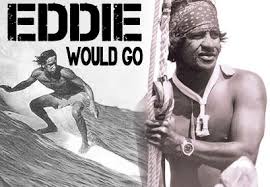
2. The angle of the film: Eddie Aikau, his career as a surfer, his identification as a Hawaiian, and his role in maintaining Hawaiian culture through family values, traditional surfing, and his voyage on the Hukalea represents the resilience and endurance of Hawaiian culture despite its erosion of foreign influence.
3. The film makers had to work around their audience's expectations to only see sports drama and show the deeper story of Eddie life.
4. If this had not been made by ESPN, the filmmakers would have put less emphasis on the surfing career and life of Eddie Aikau, and, as opposed to talking about how Eddie Aikau embodies Hawaiian identity, they use him more as a lens to see Hawaiian culture.
Wednesday, January 6, 2016
Phernology
1. Our group discussed the various articles we found about phrenology to better understand the context and data that we were looking at and how it fit with what we already knew.
2. We learned that it is important to fully understand the question that we are being asked so that we are able to distinguish between a primary source and a secondary source.
3. Provenance - The place of origin or earliest known history of something.

2. We learned that it is important to fully understand the question that we are being asked so that we are able to distinguish between a primary source and a secondary source.
3. Provenance - The place of origin or earliest known history of something.
Subscribe to:
Posts (Atom)